
Overview
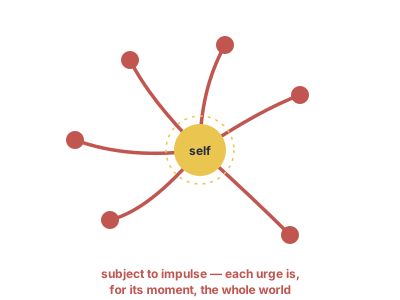
The Impulsive Mind belongs to early childhood. The young child has gained real powers since infancy. It can now recognize objects, use words, want things by name, but it cannot yet stand apart from its own impulses and perceptions. When the impulse to grab arises, there is no separate “I” standing beside the impulse deciding whether to act on it. The impulse is the self, for as long as it lasts.
This is why a four-year-old’s world can end over a broken cookie and re-begin thirty seconds later. It isn’t manipulation or weak willpower; the machinery that would hold an impulse still long enough to manage it has not been built yet. Perception works the same way: if the taller glass looks like more juice, it is more juice. The look of things and the truth of things have not yet come apart.
Subject — what it is
Impulses and perceptions. They cannot be examined, delayed, or compared, because they are doing the looking.
Object — what it has
Reflexes and sensations. The infant’s world, now held and coordinated rather than simply lived.
What it looks like
- Feelings arrive at full volume and displace each other completely. There is no mixing of “sad about this, glad about that.”
- Appearance and reality are fused — the costume is the monster.
- Time horizons are seconds to minutes. “Later” barely exists.
- Others are perceived, even loved, but they are not yet understood as having insides of their own.
Stage 1 as a pattern
Used as pattern language, “1-patterned” names moments when impulse and self temporarily re-fuse in anyone: the slammed door, the rage that is you for three seconds, the doom-scroll your hand performed before you noticed. Calling a behavior 1-patterned says nothing about a person’s development. Generally, adults visit this pattern, while toddlers live here.
The move beyond
Sometime in the early school years, impulses migrate from subject to object. The child can now have an urge and sit on it, because something more durable has formed behind the urges: needs, preferences, an agenda that persists across moments. That more durable self is Stage 2, the Imperial Mind.